

Article
EMS Frequency Explained: How Does Frequency Affect Muscle Stimulation
What is EMS frequency? We break down low, medium and high frequency ranges and how each level impacts muscle stimulation for rehab, toning and strength training.

IfIf you’ve explored EMS training, you’ve likely seen the term “frequency” mentioned again and again. Many gym owners and fitness enthusiasts wonder what EMS frequency really means, and furthermore, how different frequency settings change muscle training outcomes.
First of all, EMS, Electrical Muscle Stimulation, sends electrical pulses to activate muscle fibers. EMS frequency counts how many electrical pulses reach your muscles every second, and we measure it in Hertz (Hz). In fact, this single setting heavily shapes how your muscles respond during an EMS workout.
Low Frequency (1–20 Hz)
To begin with, low frequency pulses create gentle, slow muscle twitches. Trainers use this range widely for muscle relaxation, rehabilitation, pain relief and pre-workout warm-up. In addition, it will not trigger strong muscle contractions. For this reason, low EMS frequency wakes up muscles gently without overloading the body, especially for clients recovering from injury or people with low muscle tolerance.
Medium Frequency (20–50 Hz)
Moving on to the medium range, this is the most common range for general fitness EMS training. At 20–50 Hz, muscles produce steady, sustained contractions. Not only does it build muscle endurance, but it also boosts blood circulation and creates effective toning results. Most commercial EMS studio full-body training sessions run within this frequency band. As a result, it balances training effect and comfort, so it works well for most healthy adults.
High Frequency (50–100 Hz)
Next, high EMS frequency generates powerful, fast muscle contractions. It targets fast-twitch muscle fibers, the fibers responsible for muscle strength and muscle growth. Higher frequency delivers stronger muscle activation, yet it also brings more fatigue and discomfort. Therefore, trainers must adjust intensity carefully for each client. In short, reserve this range for advanced users and strength-focused training, not for beginners.
What happens if you set frequency incorrectly?
So what are the risks of wrong frequency settings?
If you set it too low: You will barely activate muscles; consequently, the workout feels ineffective.
If you set it too high: Users get severe muscle soreness, extreme muscle over-fatigue, or even involuntary spasms.
Frequency is not “the higher the better”. Instead, you should match EMS frequency to your training goal, client’s physical condition and target muscle groups.
Key takeaway
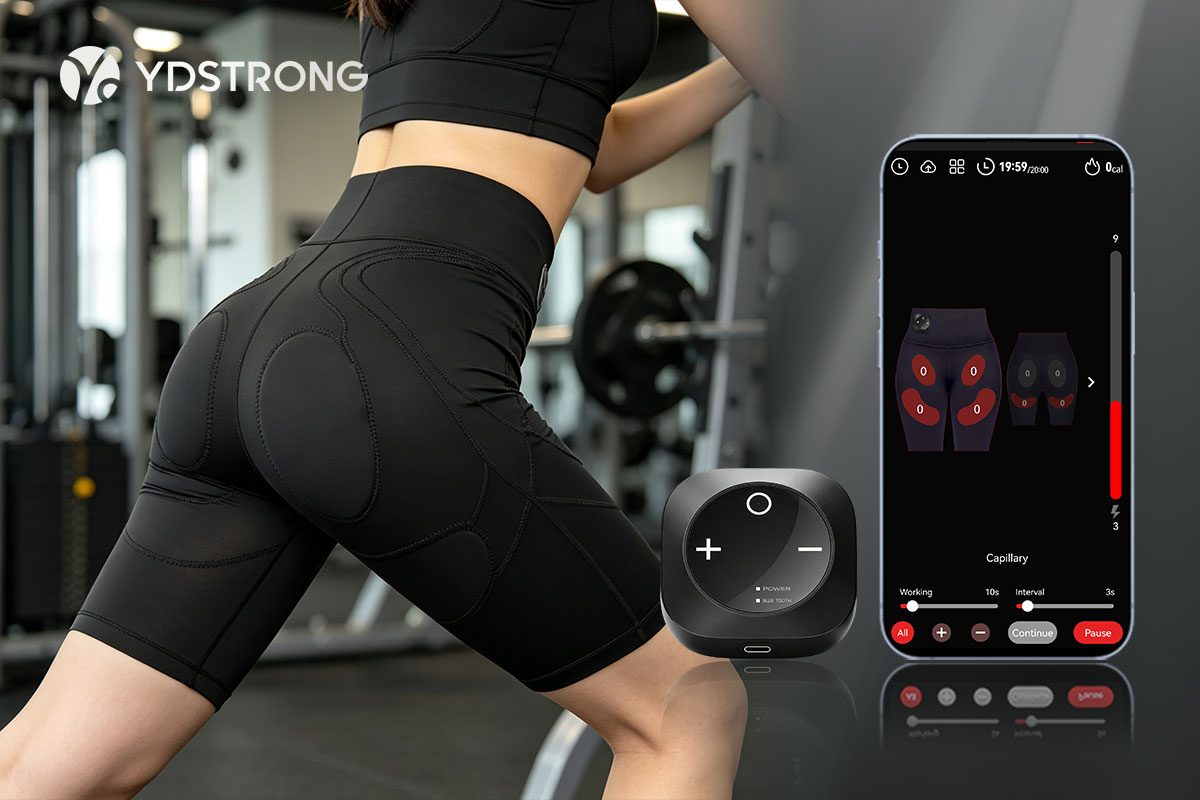
To sum up, EMS frequency directly controls how your muscles contract. To start with rehab and relaxation, pick low frequency. On the other hand, if you want body toning & endurance, choose medium frequency. Lastly, for strength & muscle gain, go with higher frequency. A quality EMS system lets trainers adjust frequency flexibly for different clients and training goals. Check our EMS training system to explore customizable frequency controls for your fitness studio.
More from adam.xu




Comments
Sign in to join the discussion.
Sign in